Category: Chinese

Mapo Tofu

Mapo Tofu

When it comes to comfort food with a fiery kick, Mapo Tofu is hard to beat. This classic Sichuan dish is rich, spicy, and packed with bold umami flavors—exactly what you need when you’re craving something deeply satisfying. Traditionally, it’s made with soft tofu, ground read more
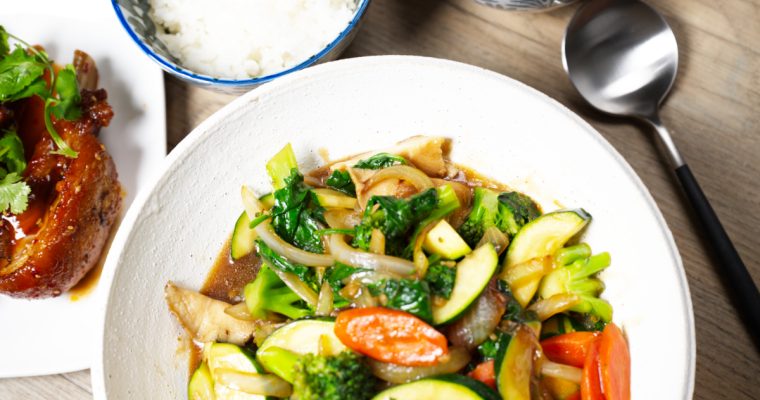
Chinese American Stir-Fry

Chinese American Stir-Fry

A lot of talk in the food world centers around words like “authentic” and “traditional.” But those can be tricky to define—especially for a cuisine that has traveled and evolved as much as Chinese food in the states. Chinese immigrants adapted their traditional dishes to read more

Sticky Char Siu Ribs

Sticky Char Siu Ribs

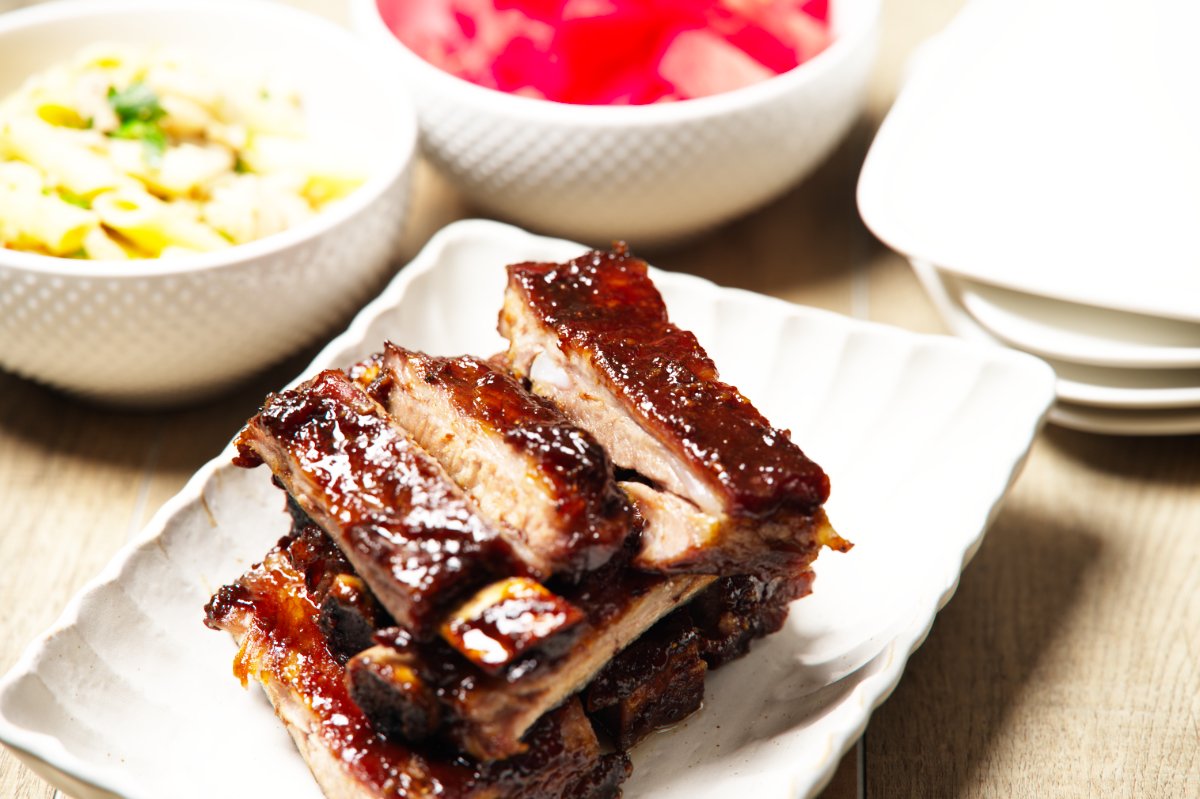
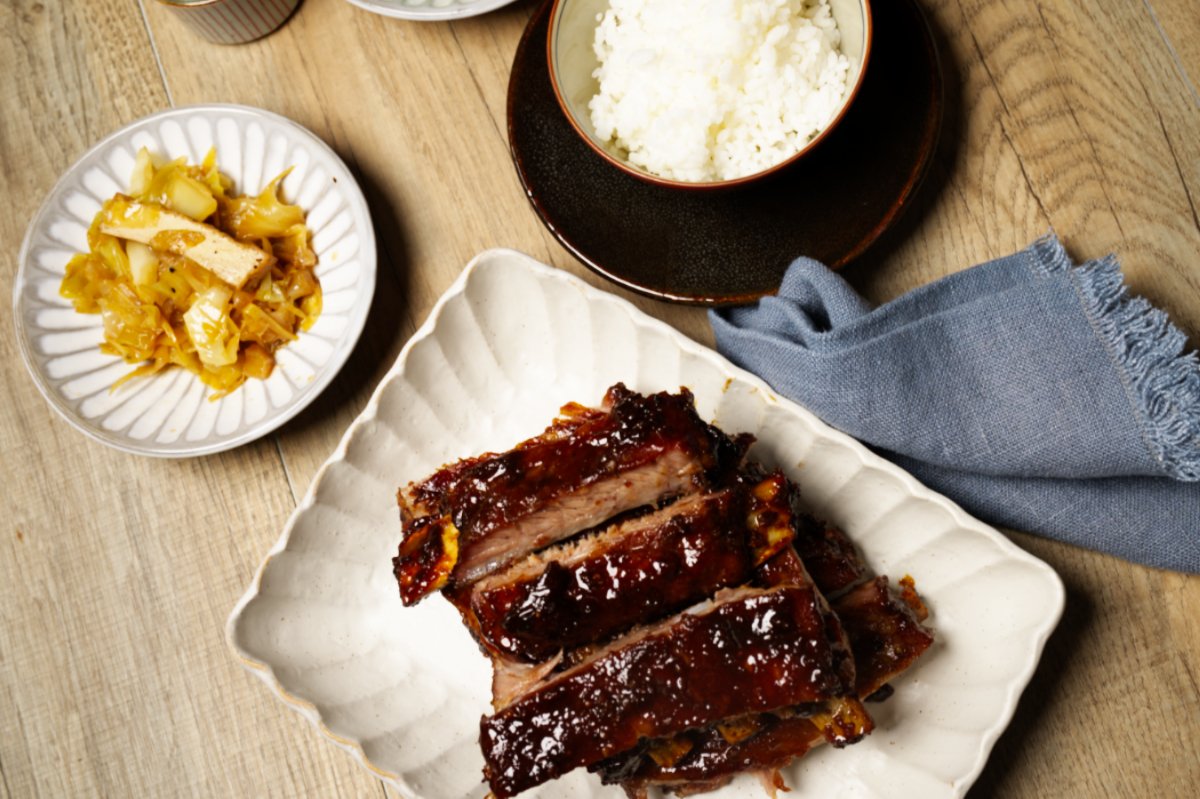
Imagine tender, juicy ribs coated in a glossy, sweet-savory glaze that clings to your fingers and begs to be licked clean. Sticky Char Siu Ribs are a tantalizing fusion of traditional Chinese barbecue flavors and succulent pork ribs. This dish takes inspiration from the beloved Cantonese char siu  and transforms it into a mouthwatering rib recipe that’s perfect for any occasion. Whether you’re hosting a summer barbecue, a  family dinner, or a July 4th feast, these ribs are sure to be the star of the show. The combination of hoisin sauce, Shaoxing wine, soy sauce, and aromatic spices like Chinese 5 spice powder creates a marinade that infuses the meat with a rich, complex flavor. Once cooked to perfection, these ribs are irresistibly sticky and sweet. Get ready to elevate your rib game and impress your guests with this delicious, but shockingly easy, twist on a classic favorite. These ribs have been called meat candy before and only require 15 minutes (?!) of hands-on time, so let’s get into it.

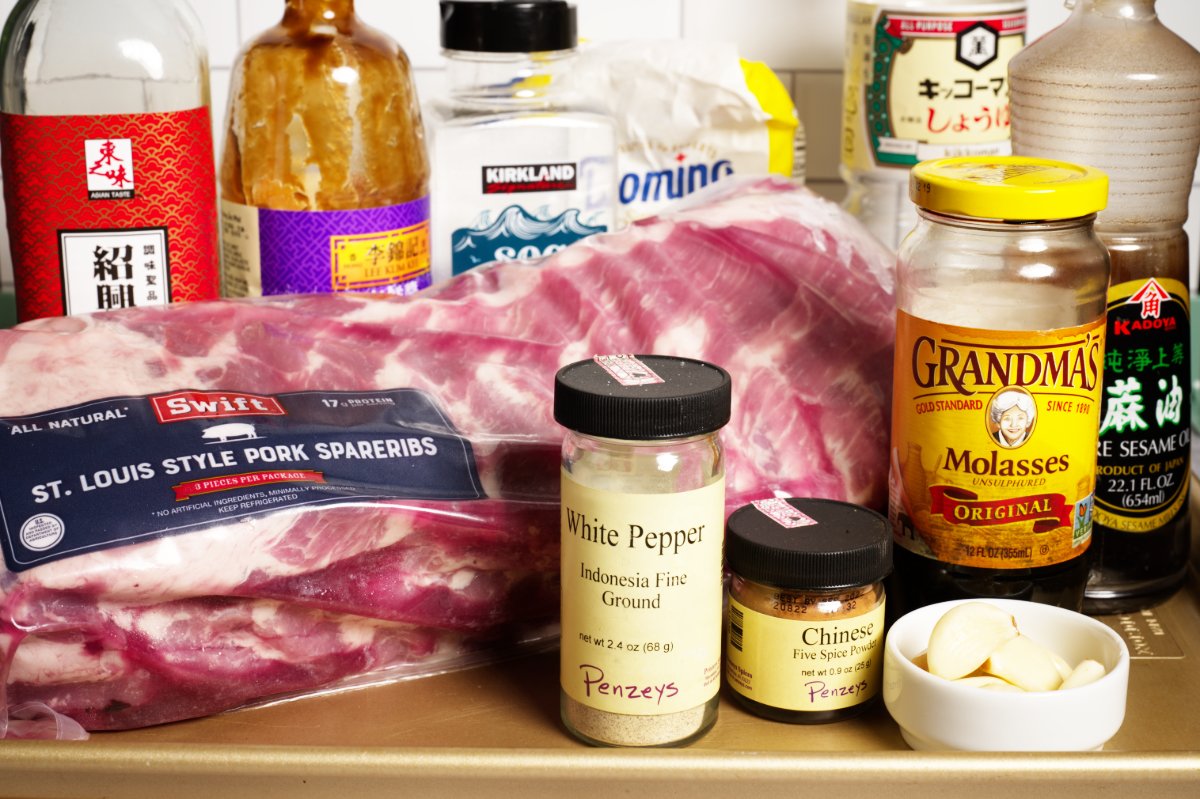
ingredients for sticky char siu ribs

Char Siu Ribs Marinade

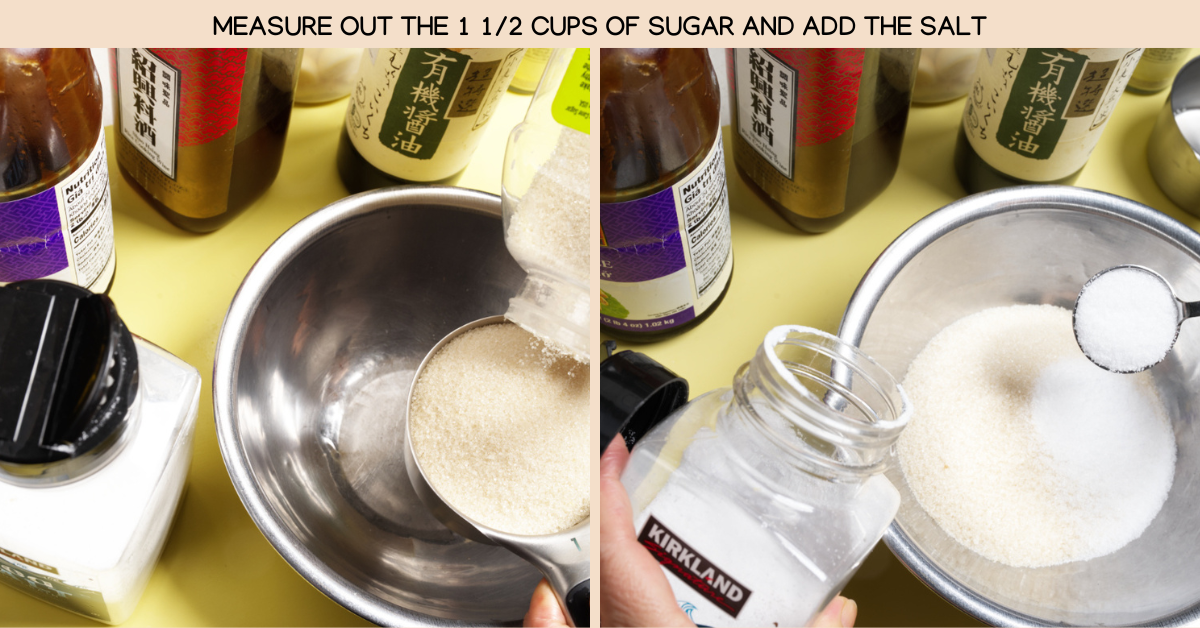
You’ve heard me sing the praises of marinades before, but please allow me to rhapsodize about them just a little bit more.  For one thing, they tenderize and add so much more flavor. What I really love about them though is how easy they make getting dinner on the table.  A few minutes of prep the night before and you wake up in the morning with the glorious feeling of not only knowing what’s for dinner, but having all of the prep already done. I repeat, you wake up and dinner is basically already made! I start by mixing all of the marinade ingredients together.

mixing sugar and salt for ribs

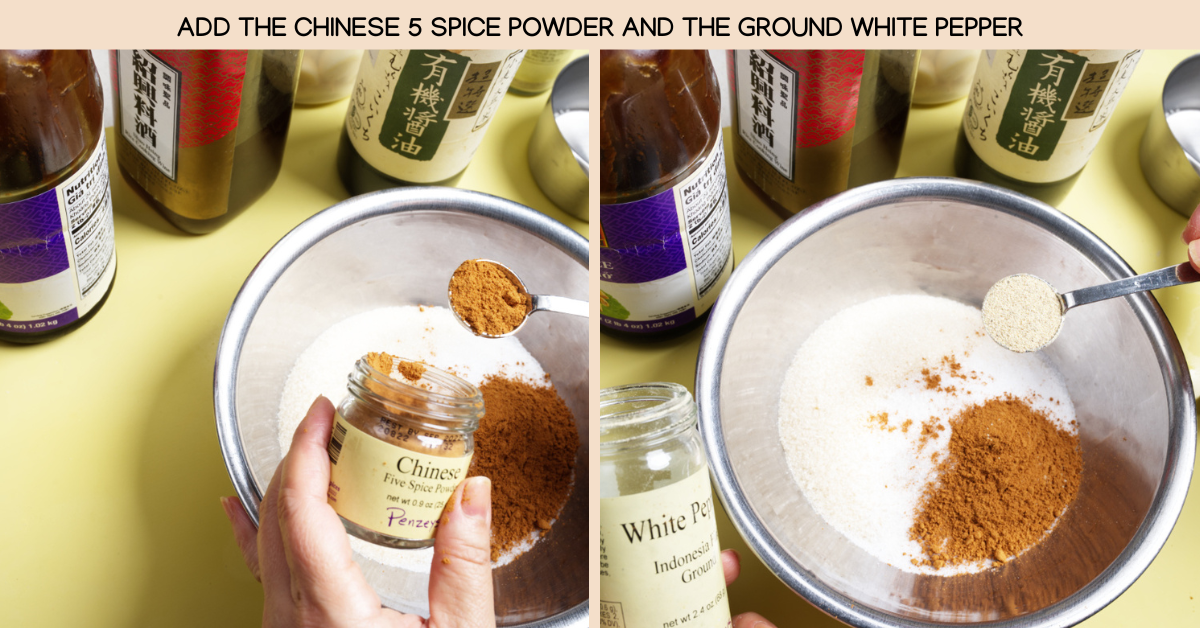
adding spices to marinade

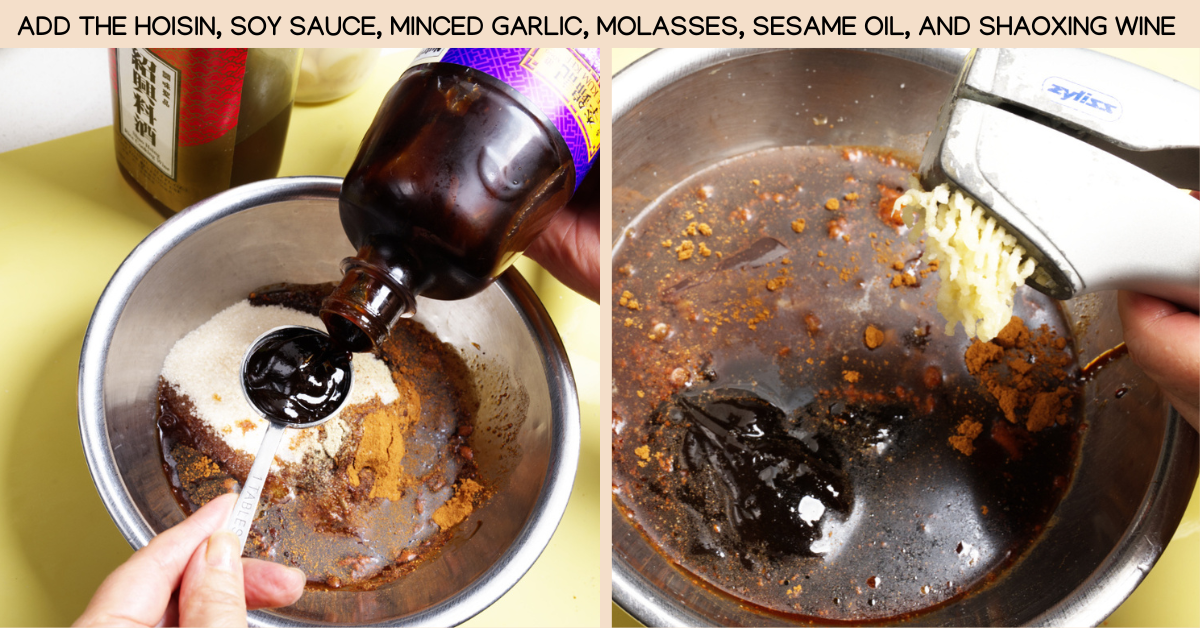
adding the rest of the char siu marinade ingredients

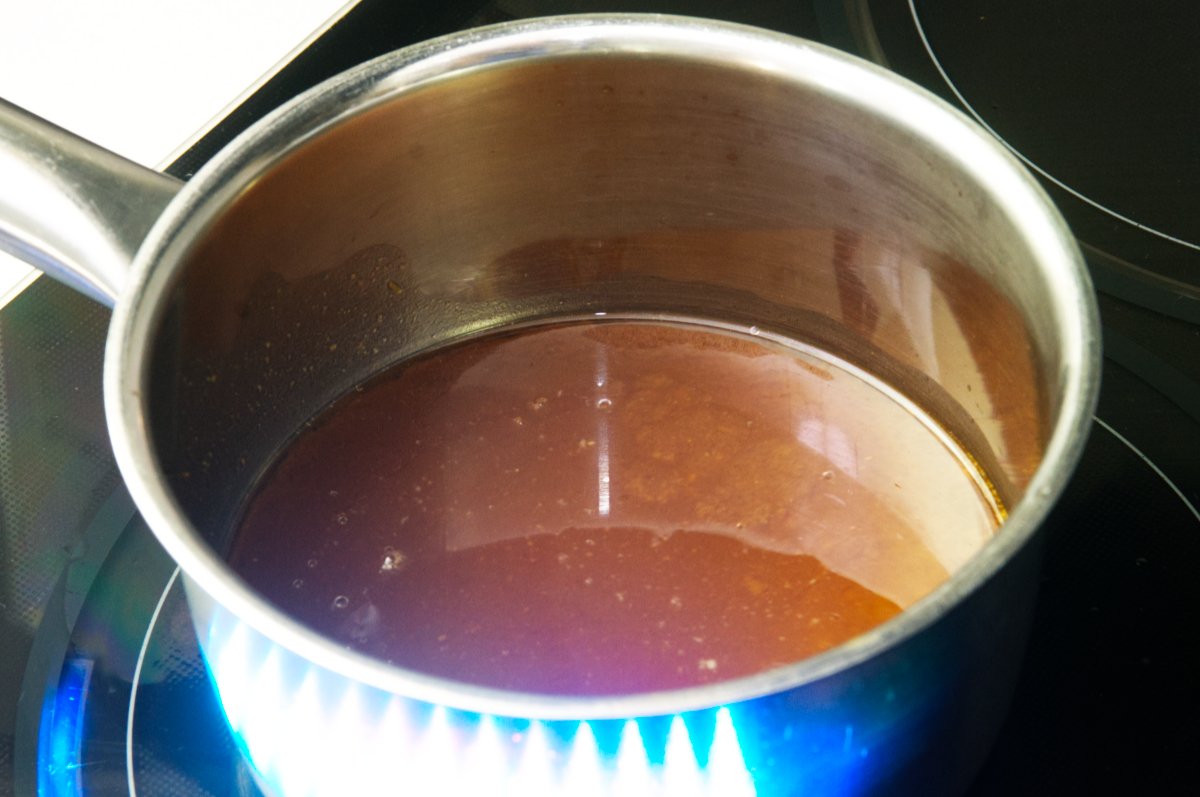
If you want the bright red color that’s characteristic of traditional char siu, feel free to add a teaspoon of red food coloring. Your Sticky Char Siu Ribs will be just as addictively delicious either way. There is too much sugar in the marinade to dissolve by stirring alone, so the next step is to briefly heat it just long enough so that all the sugar dissolves. Heat it on medium while constantly stirring, and remove from the heat when the sugar is dissolved, you should have a glossy smooth sauce.

dissolving sugar in char siu marinade

Then I let it cool to room temperature. I reserve about a cup of it and put it in the fridge, this will be used to glaze the ribs with when they’re cooking. But first we will use the rest to marinate them. You can use either St. Louis style ribs or baby backs, it’s really a matter of personal preference. Confused about the difference? St. Louis ribs are generally meatier and often have more fat, which can make them more flavorful but they may require a longer cooking time to be done to your liking. Baby backs are typically leaner and more tender, and they cook faster due to their smaller size. St. Louis ribs tend to have more meat between the bones whereas baby back ribs have more meat on top. Both will be delicious in this recipe.

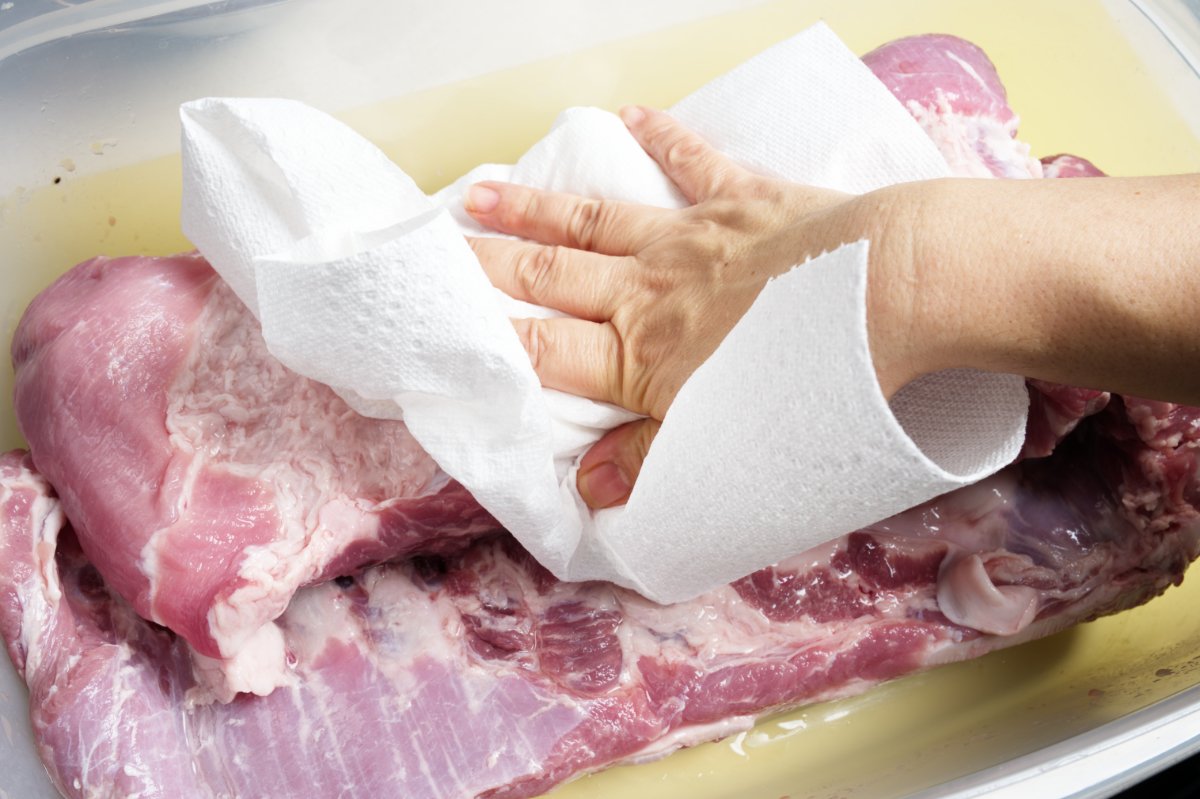
I start by rinsing the ribs and thoroughly patting them dry.

Then I use a sharp knife to pierce through the thicker silverskin on the underside of the ribs so the marinade can penetrate more thoroughly. You can also remove the silverskin, that too is a matter of personal preference. I leave it on because it’s labor intensive to remove, and it helps keep the ribs together which makes it easier to cook and serve. Some people feel removing it makes for a better eating experience, I personally don’t mind the chewy texture that it adds. You do you!

piercing skin on the underside of the ribs with a knife

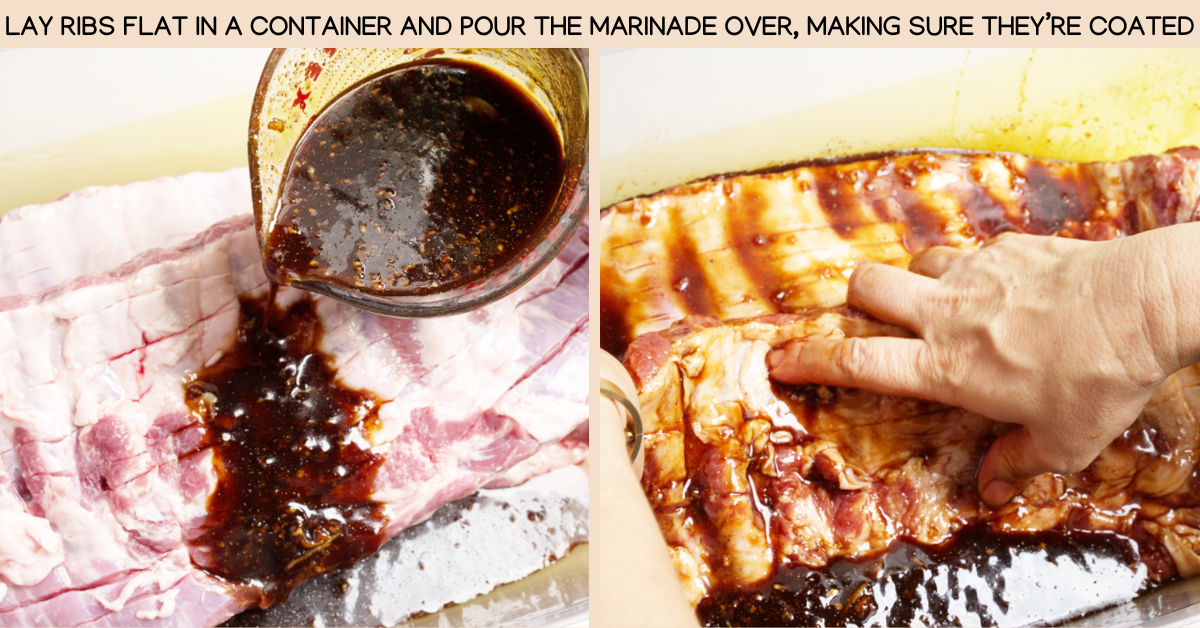
pouring marinade over sticky char siu ribs

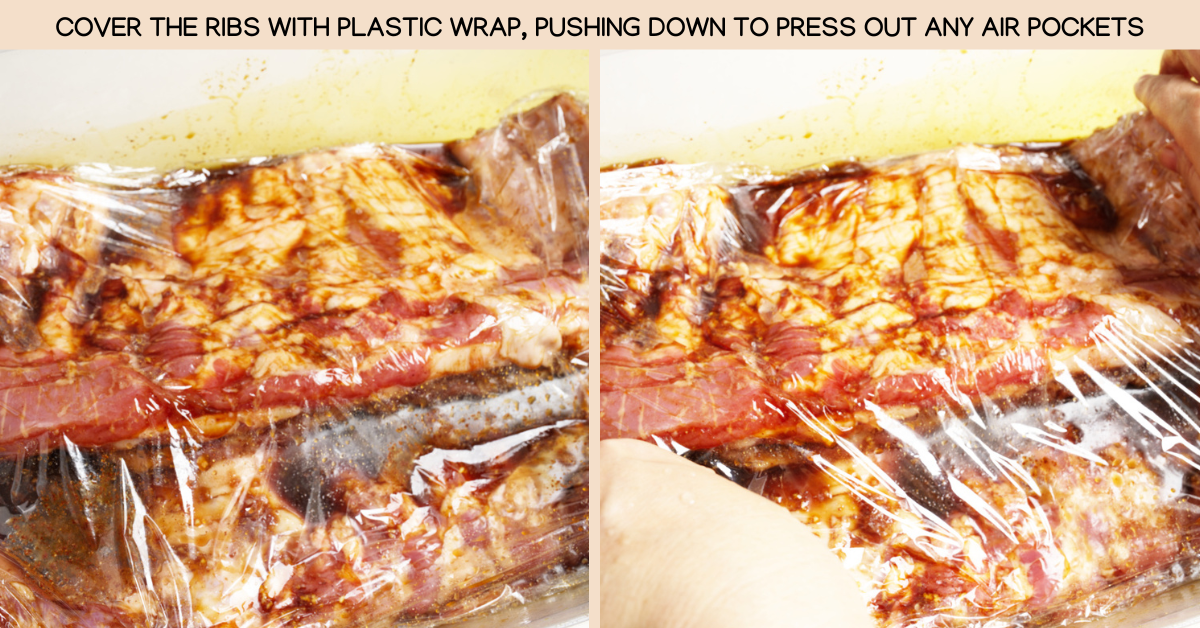
covering ribs with plastic wrap

I like to let my Sticky Char Siu Ribs marinate at least overnight. Of course two nights is even better. I flip them over in the middle so both sides are fully coated. When I’m ready to cook these bad boys, I remove them from the marinade, discarding the excess. I bake them on a shallow baking sheet lined with foil.

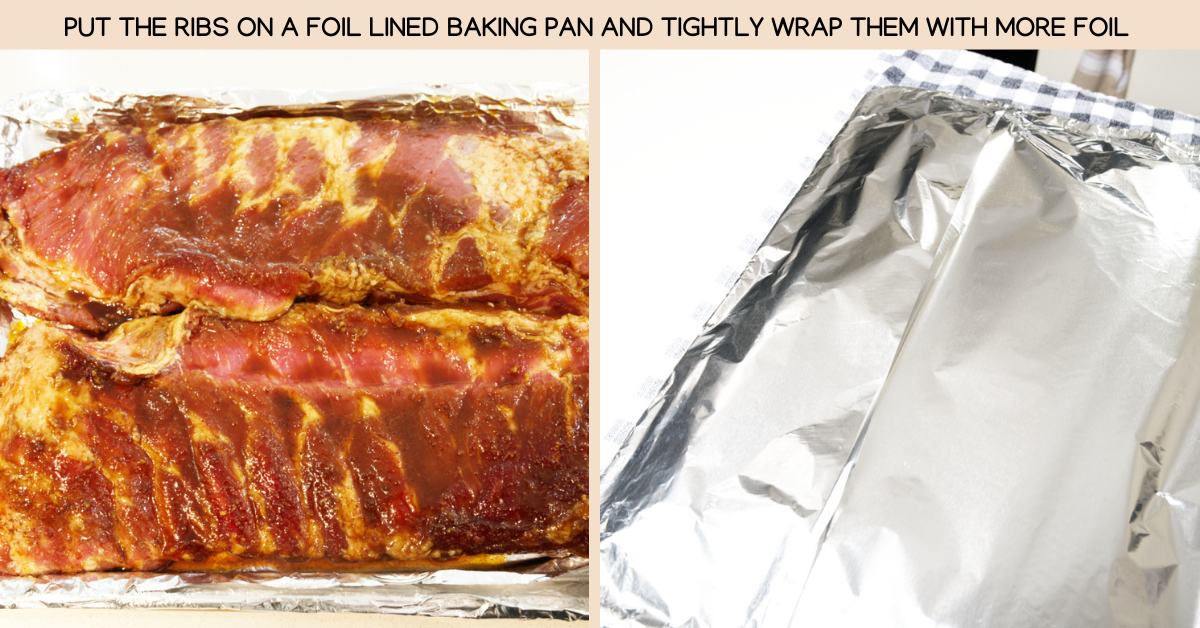
wrapping ribs with foil

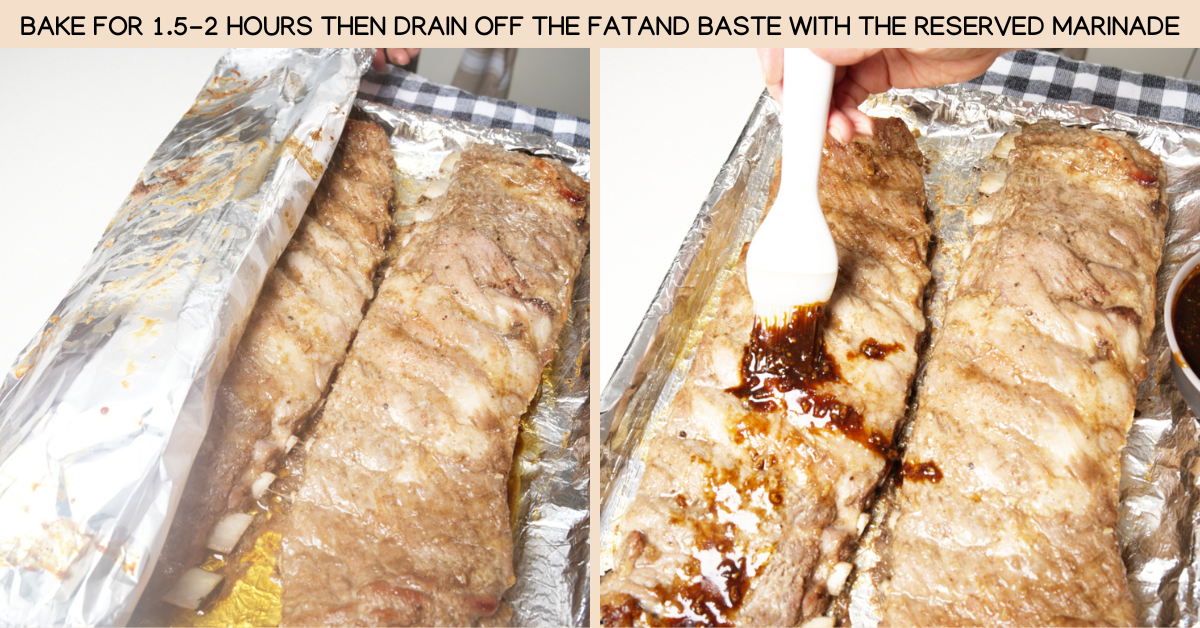
basting ribs

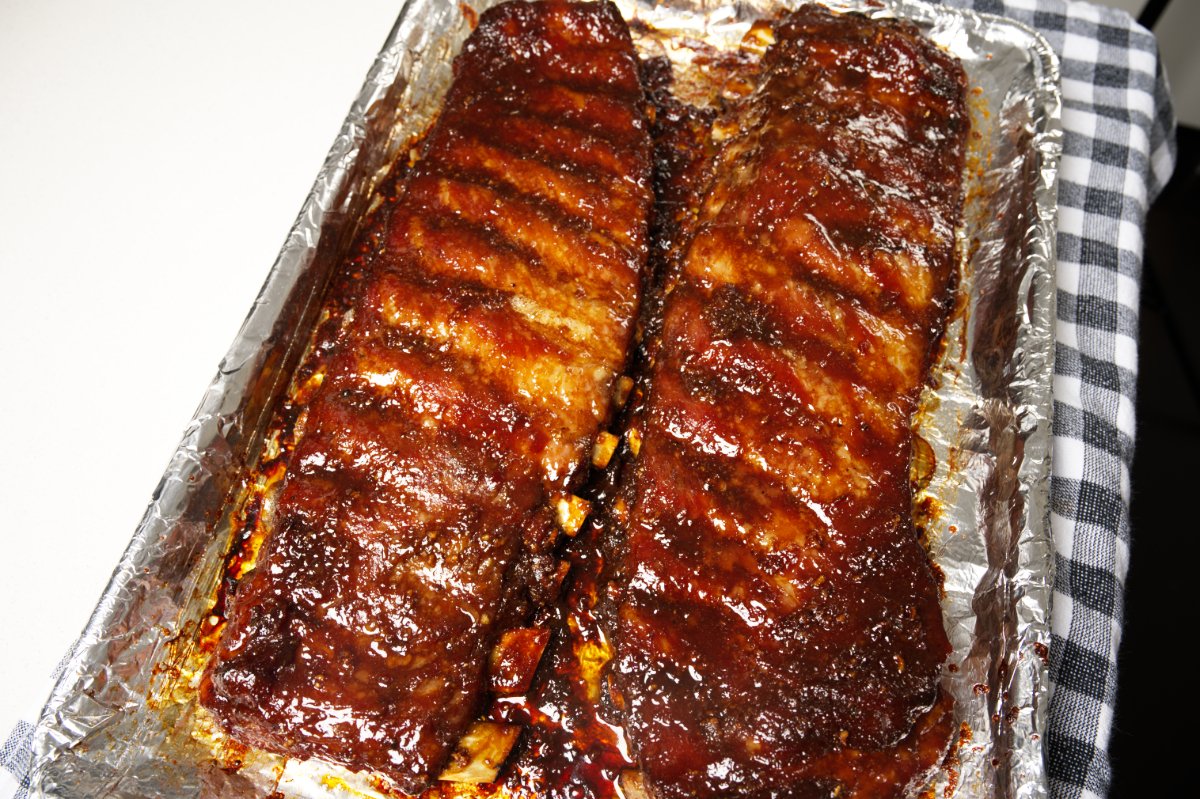
It is more of an Asian style to cook ribs until they are tender, but not falling off the bone. We generally like a little chew left. But if you prefer them to be fall off the bone, bake them for another hour or so before removing from the oven. Then cook for another hour, basting every 15 minutes. They will look lusciously glazed and smell amazing when finished:

Serve with Corn Fritters, Japanese Potato Salad,  Lychee Mai Tais, and Mango Sago for an epic summer feast your guests won’t stop raving about! Can’t wait to hear what you think of these, or to see platters of your glorious Sticky Char Siu Ribs-tag us @funkyasiankitchen, we love seeing your creations.


Print
clock clock iconcutlery cutlery iconflag flag iconfolder folder iconinstagram instagram iconpinterest pinterest iconfacebook facebook iconprint print iconsquares squares iconheart heart iconheart solid heart solid icon
recipe card photo sticky char sui ribs

Sticky Char Siu Ribs

  • Author: Funky Asian Kitchen
  • Prep Time: 15 minutes (plus marinating time)
  • Cook Time: 3-3 1/2 hours
  • Total Time: 0 hours
  • Yield: serves 4-6 1x
  • Category: entrees
  • Cuisine: Chinese

Ingredients

Scale
  • 2 racks St. Louis style or baby back ribs

Marinade:

  • 1 ½ cup sugar 
  • 2 Tablespoons salt
  • 3 teaspoons five spice powder
  • 2 teaspoons ground white pepper
  • 3 Tablespoons sesame oil
  • ½ cup shaoxing wine
  • ½ cup soy sauce
  • ½ cup hoisin sauce
  • 3 Tablespoon molasses
  • 12 cloves garlic (finely minced)
  • 1 teaspoon red food coloring (optional)

Instructions

  1. Make the marinade by combining the sugar, salt, five spice powder, ground white pepper, sesame oil, shaoxing wine, soy sauce, hoisin sauce, molasses, garlic, and red food coloring in a medium saucepan. 
  2. Turn the heat to medium and keep mixing until you dissolve the sugar. Do not bring the marinade to a simmer. Just heat it enough to melt the sugar.
  3. Let the sauce cool to room temperature.
  4. Reserve about 1 cup of the marinade separately and store in the fridge. You will use this marinade for glazing the ribs.
  5. Rinse the ribs and thoroughly pat them dry with paper towels. Trim any excess fat. Then flip the ribs bone side up and score the underside of the ribs several times with a sharp knife through the silver skin so the marinade will penetrate more thoroughly. If you prefer, you can also remove the silverskin by grasping the edge and pulling it off.
  6. Transfer the ribs to a container and pour the rest of the marinade over the ribs making sure the ribs are evenly coated.
  7. Put a piece of plastic wrap on top of the ribs pushing down to eliminate any air pockets. Cover and allow the ribs to marinate for at least 4 hours in the fridge. But for the best flavor, allow the ribs to marinate 2 days, flipping the ribs over halfway during the marinating time to ensure even absorption.
  8. Pull the ribs out of the marinade, allowing any excess to drip off. Put the ribs in a shallow foil covered baking tray, making sure the ribs are in one layer. Cover the ribs tightly with aluminum foil. Discard the used marinade.
  9. Preheat your oven to 300 degrees and move the oven shelf to the middle.
  10. Put the ribs in the oven and bake for 1.5-2 hours, until the ribs are just starting to get tender but are still somewhat firm.
  11. Remove the ribs from the oven, uncover and pour off the fat and juices that have collected in the tray. Baste with the reserved marinade. Return to the oven and bake for another hour, basting every 15 mins. 
  12. Allow the ribs to rest for 10 minutes. Slice and serve!

Notes

*These ribs are tender but not fall-off-the bone soft, which is more of an American tradition with ribs. If you prefer a softer texture, cook the ribs initially for an extra hour before uncovering to start the basting.

* Any leftover ribs can be refrigerated. They keep for 5 days in the fridge. You can either heat the ribs in the oven wrapped in foil or in the microwave for a couple of minutes. 

*You can also freeze any cooked ribs. Refrigerate to defrost before heating as directed above. If you choose to microwave from frozen, lower the power and microwave gently or choose the defrost setting before heating.

Keywords: char siu, bbq, barbecue, chinese food, ribs, summer, marinades

8 Treasure Rice

8 Treasure Rice

Lunar New Year starts on February 10th this year. It is a 2 week celebration that is one of the most (raucously!) celebrated holidays of the year for the more than 1.5 billion people worldwide that celebrate. Think fireworks, parades, elaborate decorations, gifts, new festive read more

Broccoli Shiitake Shumai

Broccoli Shiitake Shumai

It’s always nice when everyone at the table can enjoy the same meal and no one feels left out. My beautiful friend Ellen Kanner has been making sure that vegans have delicious and exciting food on her table with her wonderful blog Soulful Vegan, her read more

Shumai

Shumai

Everyone loves dumplings, that’s just an undisputed fact. Not everyone feels confident making them from scratch though. These Cantonese Shumai are little juicy bundles of delight, they are a dim sum favorite for a reason after all, but they are also an excellent way to dive into dumpling making for the first time. There’s no complicated pleating, or fancy crimping, or exploding seams to worry about. They still look elaborately impressive, and the savory filling is umami perfection! Combining the classic flavors of pork and shrimp with some simple seasonings, these Shumai are so delicious, you’ll come back for them again and again.

Whether you’ve eaten ravioli, tortellini, wontons, gyoza, or potstickers, you’ve had a version of dumplings. Luckily for home cooks, Shumai are the dumping equivalent of a free form tart. They are virtually impossible to screw up and any less than perfect shapes only add to the charm. Plus, you get a mouthful of the best part, the amazing filling. Nothing is worse than biting into a dumpling and wondering what happened to the filling. Shumai will never disappoint you because they are jam packed. The open top means you can cram a generous amount without worrying about how you’re going to seal it closed. So let’s get your freezer stocked with some of these lovelies.

ingredients for shumai

Making the Shumai Filling

Shumai are stuffed with a divine mixture of rich and juicy pork, savory shrimp, earthy dried shiitake mushrooms and some of my favorite flavor bombs like Shaoxing wine, white pepper, toasted sesame oil, and oyster sauce. Hopefully these items are already part of your pantry. If not, you can always substitute with some good (if slightly different) results. You can use other dried or fresh mushrooms for the shiitake. Dried shiitakes are best for intense authentic flavor, but some fresh shiitakes or portobellos would work fine too.

Don’t have any Shaoxing cooking wine? Try some dry sherry (my first choice), sake, or even mirin instead. If you don’t have any oyster sauce, a little fish sauce or even more soy sauce would work. And if you’re out of toasted sesame oil, my heart breaks for you as nothing can match the deep toasty flavor, but a little neutral oil can still boost the juiciness of your dumplings.

I start by submerging the dried mushrooms in boiling water until softened:

While I’m waiting for them to soften, I start making the pork mixture. Just a quick note on ground pork. When you go to the grocery store you are looking for a fatty grind, the kind you would use for making sausages. Please don’t buy lean ground pork. You will sacrifice flavor, juiciness, and happiness. A dry dumpling is a sad dumpling ;)

Mixing the pork until it is a fine paste is essential to get the right springy texture that is characteristic of Shumai. Once you add the flavorings, you’re going to want to mix and slap the mixture. At first the meat will break apart but as you continue to work it, it will get sticky and pasty. This takes about two minutes so keep kneading and mixing.

bowl shumai

slap pork shumai

mushrooms and shrimp and pork shumai

Mix it all thoroughly together and then the filling is ready.

Make the Shumai

To make the most traditional shumai, I seek out a Hong Kong style wonton wrapper. They are quite thin and have the yellow color shumai are famous for, but if you can’t find them, any wonton wrapper will work. I used the square wrappers because they are the easiest to find in my area but round would work even better. Take out a small stack of wrappers from the pack and keep the rest covered so they don’t dry out. Have a small dish of water ready to adhere the corners of the wrapper to the dumpling.

Start by putting a generous tablespoon of filling into the center of a wrapper, and then use one hand to cup and hold it upright (I put my fingers together to form an “O” ) while you use the other hand to gently push the filling down with a spoon or butter knife. Gently smooth the surface of the dumpling and then fold the corners of the dumpling down (if you are using square wrappers) and stick it to the side of the dumpling using a little water as glue.

shaping shumai

Place the Shumai on the counter and continue shaping it so you have a nice compact mini cylinder. Finally, put the completed shumai on a tray and proceed with filling and shaping more Shumai until you have used up all of the pork mixture. You will yield approximately 30 pieces. Freeze any unused wrappers in an airtight container for future use.

Once your dumplings are completed, they are usually garnished with a little orange caviar for color. This is not necessary but a nice touch if you have it. Pro tip: Order 1 piece of Masago or Tobiko caviar from a Japanese restaurant sashimi style. You only need a small amount on each dumpling and this way you won’t have to deal with using out a full container of caviar. Alternatively, finely diced carrot can also be used to garnish the Shumai. Or go minimalist and don’t bother. The Shumai will still taste great.

Cooking the Shumai

Steaming keeps the shumai extra tender and juicy. Whatever type of steamer you have, make sure you spray it with nonstick oil spray before placing the raw dumplings so these delicate babies don’t stick to the pan. I fill my bottom pan with plenty of water and then bring it to a rolling boil on high before placing the steamer insert with the dumplings.

Cover with the lid and then steam on high until the dumplings are cooked through the center, about 10 minutes. If you’re not sure the dumplings are fully cooked, take the largest dumpling you see and cut through the center to check.

steaming shumai

Continue to steam all the shumai and then it’s time to enjoy your labors. Generally these aren’t eaten with a dipping sauce, but rather served alongside bottles of soy sauce, vinegars, and chili oil so you can choose your own adventure. A bowl of this chili crisp would be most welcome too!

If one batch of Shumai is too much for one sitting, you can easily freeze them either raw or cooked. If you prefer to freeze them raw, place the tray in the freezer uncovered until the Shumai are frozen solid (3-4 hours). Then transfer them to a freezer safe bag or air tight container. When you are ready to cook them, steam them straight from the freezer, adding 3-5 additional minutes to the cooking time.

Looking for the fastest and easiest way to a meal? Then I suggest pre-cooking them before you freeze. Once the Shumai are cooked, let them cool to room temperature, place them in a freezer safe bag or airtight container, and freeze. You can reheat them either in the steamer or the microwave straight from the freezer. To mimic the steaming process in the microwave, put a couple tablespoons of water with the shumai and cover with plastic wrap before microwaving for a couple minutes.

Try these delicious Shumai and let me know what you think! I hope you love them as much as we do, and that you are inspired to try your hand at some of our other really popular dumpling recipes, like these Korean Mandu or these Mushroom Dumplings.


Print
clock clock iconcutlery cutlery iconflag flag iconfolder folder iconinstagram instagram iconpinterest pinterest iconfacebook facebook iconprint print iconsquares squares iconheart heart iconheart solid heart solid icon
recipe card shumai

Shumai

  • Author: Funky Asian Kitchen
  • Prep Time: 35 minutes
  • Cook Time: 10 minutes
  • Total Time: 45 minutes
  • Yield: makes 30 shumai 1x

Ingredients

Scale
  • 2–3 dried shiitake mushrooms
  • 1 pound fatty ground pork
  • ½ teaspoon salt
  • 1 teaspoon sugar
  • 1 teaspoon soy sauce 
  • 2 teaspoons oyster sauce
  • ½ teaspoon ground white pepper
  • 1 ½ Tablespoons Shaoxing rice wine
  • 2 teaspoons sesame oil
  • 6 ounces peeled and deveined shrimp (you can use any size)
  • 2 Tablespoons finely chopped white portion of green onion
  • 1 teaspoon cornstarch
  • 1 large egg white (save yolk for another purpose)
  • 30 wonton wrappers / egg wrappers 8cm/3.5″ squares or rounds
  • Oil spray for steamer basket

GARNISH:

  • 1 Tablespoon masago/tobiko caviar or very finely minced carrots

FOR SERVING:

Soy sauce, vinegar (Chinese black or white distilled), and chili oil or paste


Instructions

Make the filling:

  1. Place the mushrooms in a bowl and cover with boiling water. Submerge the mushrooms using a small plate/bowl and soak until soft, about 15-20 minutes.
  2. Squeeze out excess water and trim and discard the woody stems. Finely chop the mushrooms and set aside.
  3. Peel the shrimp and then chop it into small pieces with a knife. I keep the shrimp roughly chopped so you can taste the shrimp better in the filling.
  4. Place the ground pork, salt, soy sauce, oyster sauce, rice wine, and ground white pepper in a large mixing bowl.
  5. Mix the pork vigorously with your hands, slapping it around the bowl, until it becomes sticky, about 2 minutes.
  6. Add chopped mushrooms, shrimp, green onions, egg white, and cornstarch. Mix well.

Making Shumai:

  1. Have a small dish of water ready if you are using square wrappers.
  2. With your left hand (or right hand if you are left-handed), bring your thumb and fingers together to form an “O”
  3. Place the wonton wrapper over the “O”
  4. Take 1 heaping Tablespoon of filling and gently pack it into the center of the wrapper, pushing into the “O”.
  5. Use the back of the spoon or a butter knife to smooth the filling so it’s even with the edge of wonton. If you’re using square wonton sheets, wet the outside of the shumai lightly with water and fold the corners of the square down so it sticks to the side of the shumai.
  6. Place the shumai on the counter and use your fingers to shape it into a round cylinder. 
  7. Set the shumai on a plastic wrapped tray or large plate and continue making shumai until you have used up all of the filling. (you may have some wrappers leftover. You can re-freeze any leftover wrappers that you don’t use.)
  8. Garnish the dumplings by adding a tiny bit of caviar or chopped carrots to the top of the shumai.
  9. Set up a double boiler or a bamboo steamer/steamer basket in a wok or large deep skillet with 3-4 cups of water and bring the water to a boil over high heat.
  10. Oil the surface of the steamer basket and place as many shumai as can fit into the basket without touching. 
  11. Once the water is boiling, place the steamer basket into the steamer and cover with a lid.
  12. Steam the shumai for 8-10 minutes until the center is cooked through and a temperature reading is 165. (You can cut into the center of the biggest one to check.)
  13. Place the shumai onto a platter and continue to cook any remaining shumai, adding more water to the pot if needed.
  14. Serve the shumai right away with soy sauce, white/black vinegar, and chili oil.

Notes

*Shumai is generally not served with dipping sauce. Instead you are encouraged to make your own sauce with soy sauce, vinegar, and chile oil at dim sum restaurants.

* You can freeze any raw or cooked shumai:

If you’re freezing raw shumai, leave them on the tray and place the tray in the freezer. Freeze for several hours until they are frozen solid. Transfer to a freezer safe bag or container once frozen. When you are ready to steam, you can freeze them straight from the freezer, adding 3-5 minutes of cooking time.

If you are freezing cooked shumai, let them cool to room temperature first and then transfer to a freezer safe bag or container. You can reheat them by steaming or microwaving for a couple of minutes straight from the freezer. If you’re microwaving, add a couple tablespoons of water to the shumai and then cover with plastic wrap before microwaving. This helps preserve moisture by mimicking the steaming process.

Keywords: shumai, shrimp, pork, chinese, cantonese, dim sum, dumplings, wontons, lunar new year, holiday