

Is it just me, or does this feel like the 17th week of February? The February Doldrums are real, and if you suffer from them too you could use a vibrantly red, meaty, warming one pot dish to ward them off. This Beef Sundubu-Jjigae is pure Korean comfort in a bowl. Inspired by the beloved spicy soft tofu stew known as Sundubu-jjigae, this version adds tender bites of succulent beef for a little extra heartiness. The tofu is impossibly silky, and the broth is pleasantly fiery from gochugaru.
And then there’s the egg.
Cracked right into the simmering stew, it gently poaches in the heat, turning the broth creamy and luxurious as you break the yolk and swirl it through. It’s dramatic. It’s cozy. It’s like a little sunshine peaking through.
While this dish is a staple in Korean households and restaurants, making it at home is surprisingly simple. A quick homemade anchovy stock (no, seriously, the quickest stock you’ll ever make!) gives you that deep, ocean-kissed depth, and the rest comes together in under an hour.
So grab a heavy pot, and let’s banish the February Doldrums together.
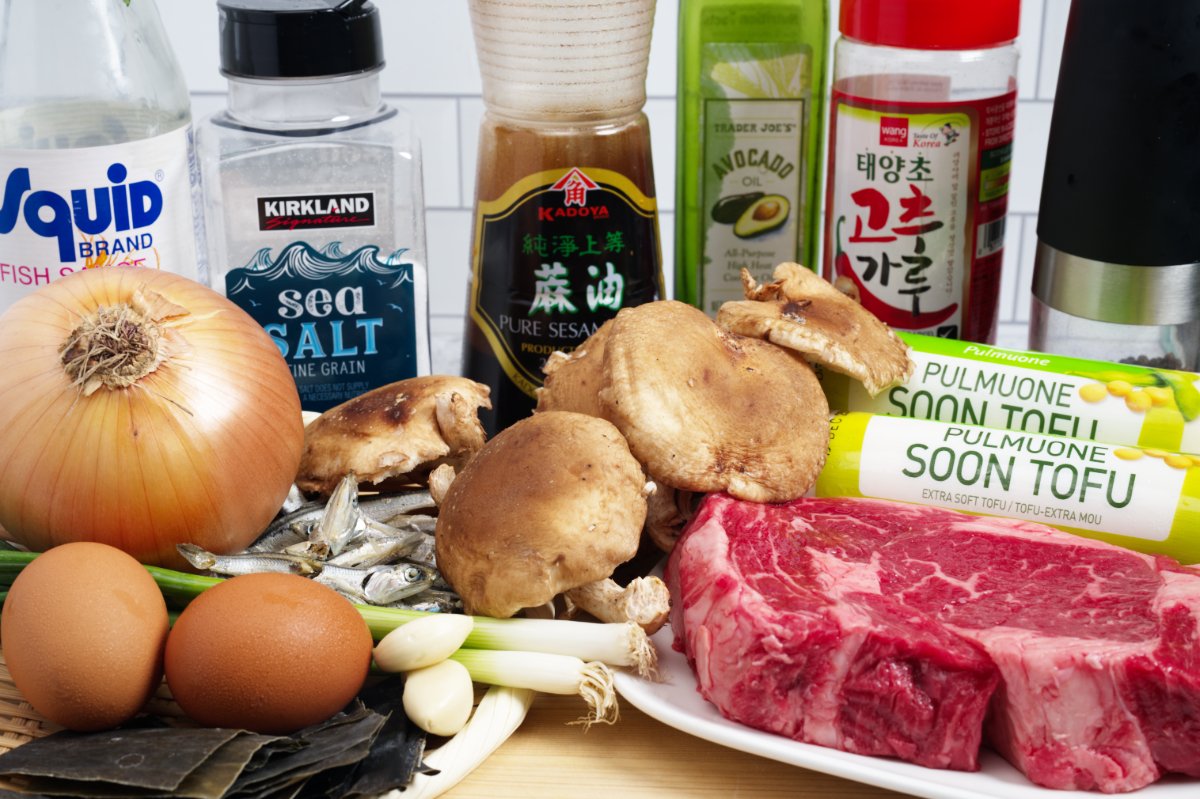
I start my Beef Sundubu-Jjigae by making an anchovy stock. I know what you’re thinking when you hear ‘stock’, but this is so quick and easy; no roasting bones or hours simmering on the stove. Dried anchovies and kombu simmer for just 30 minutes, and then get strained. Easy peasy. I give more detailed instructions here.
Remove the heads and guts from the anchovies. This prevents the stock from being too fishy. Just twist off the heads and right under the head, towards the upper belly section, you will see a small black nugget. Those are the guts and it’s easy to pluck them out.
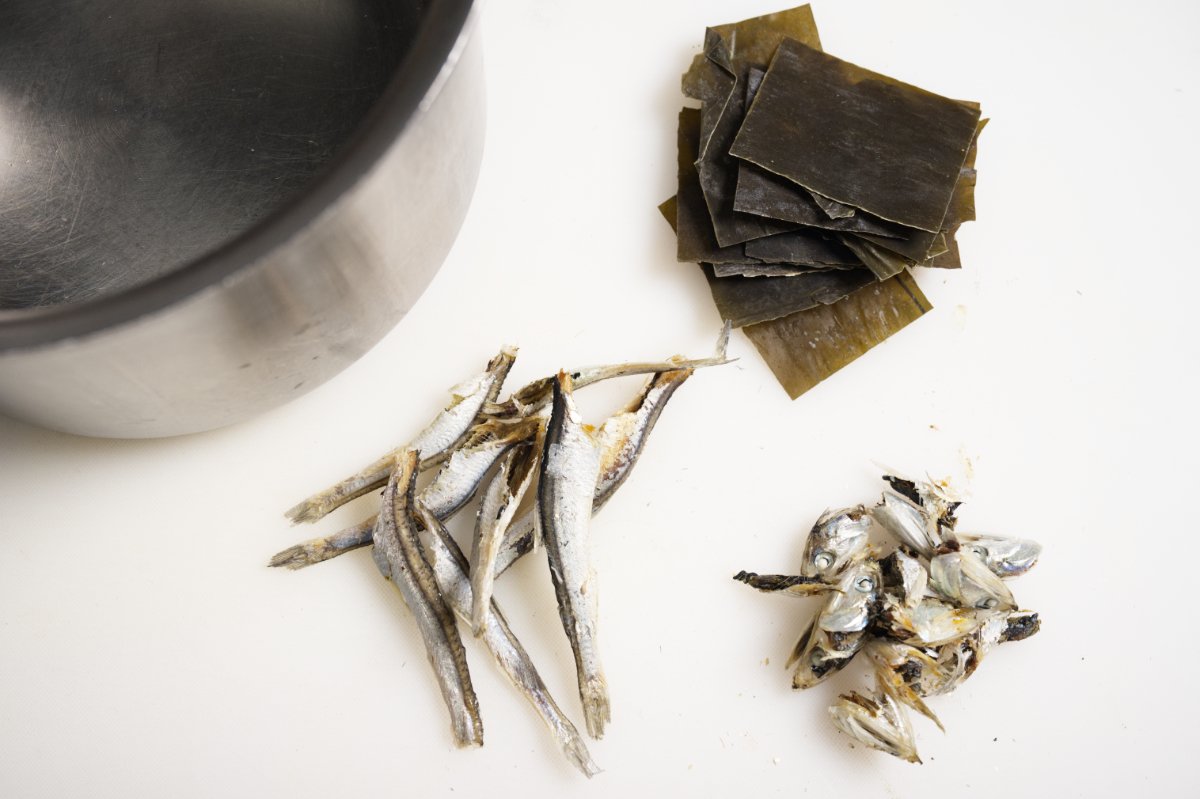
Add the kombu and the anchovy to a pot of water and simmer for 30 minutes. This can be made ahead of time and kept in the fridge for a few days. You can also freeze it so it’s ready to use whenever you need it.
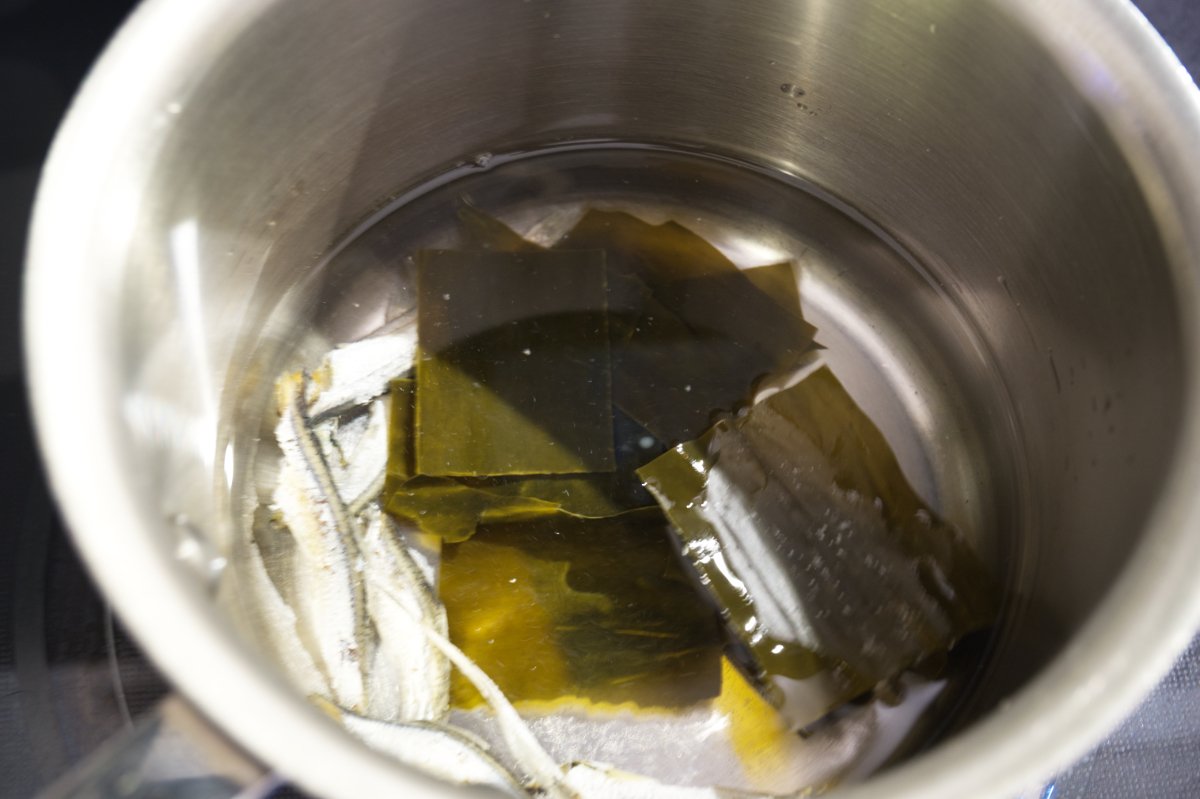
I know we’re all busy, and while this stock is really quick to make, you can instead sub bottled clam juice or store bought chicken stock in a pinch. You will still have a glorious sundubu-jjigae.
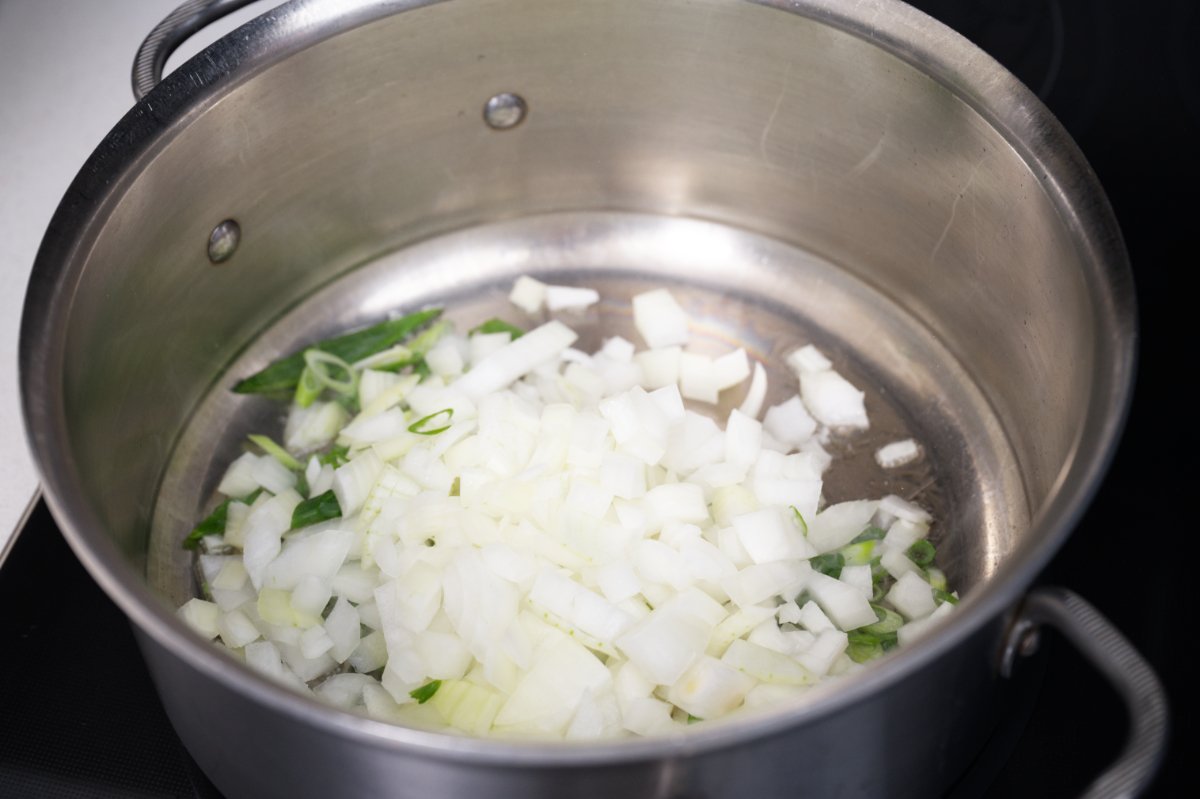
Once the stock is done the stew comes together in no time. Start by heating a heavy pan and sauté the onion, scallion, and garlic:
Add the sliced beef and shiitakes:
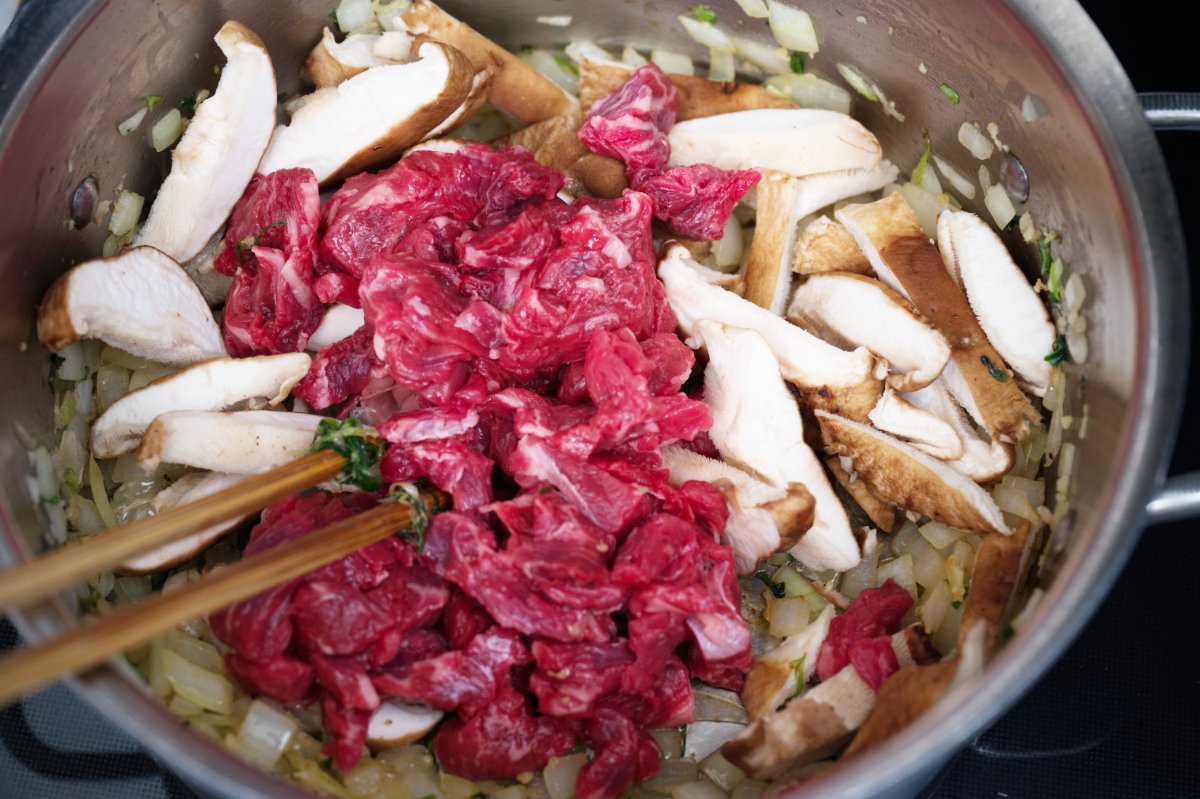
Cook for a couple minutes until the beef is mostly cooked through:
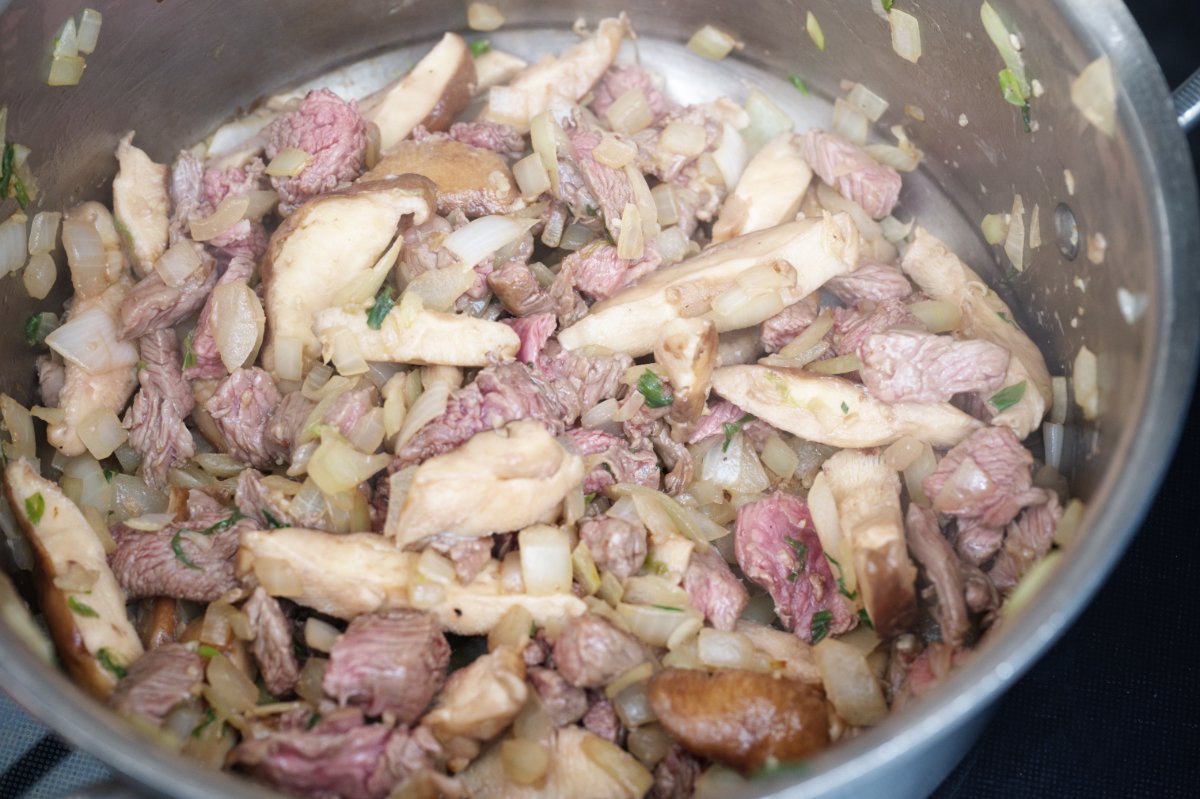
Then add in the stock:
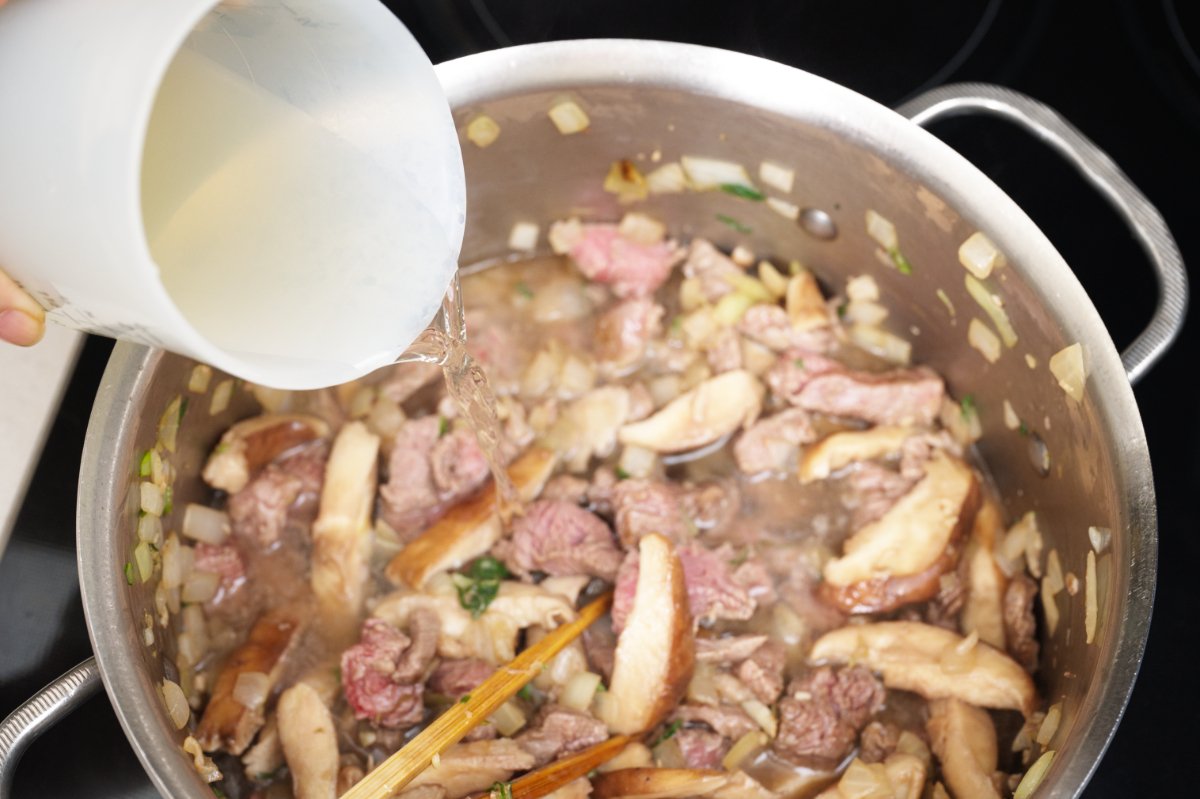
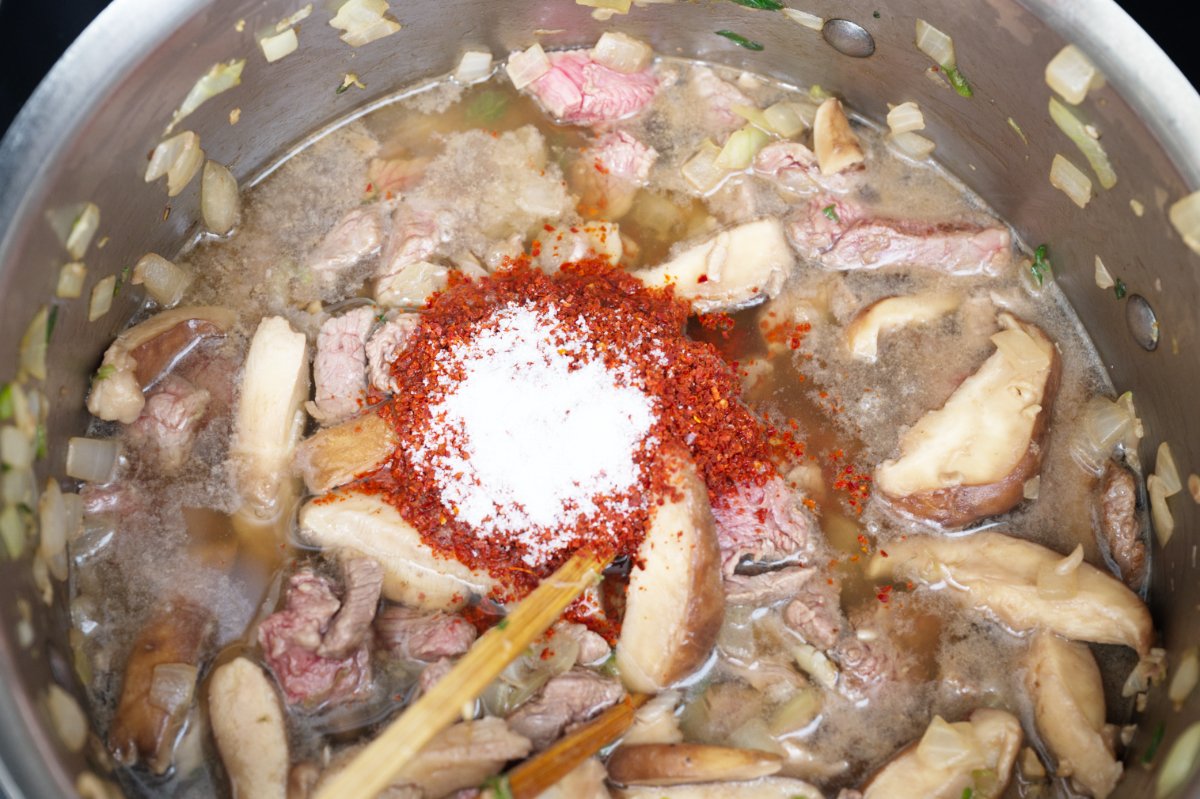
Then it’s time to add the magic ingredient that gives jjigae its famous ruby glow. Gochugaru, the vibrant red Korean chili flakes used in this stew, bring warmth and depth rather than aggressive heat. Unlike crushed red pepper flakes, gochugaru has a slightly smoky, subtly sweet quality with a fruity finish. It gives the broth gentle heat without overwhelming the dish. Think flavorful and warming, not tongue-numbing. If you’re particularly heat sensitive you can always start with less and add more.
Add the pepper flakes and salt:
Add the fish sauce and toasted sesame oil:
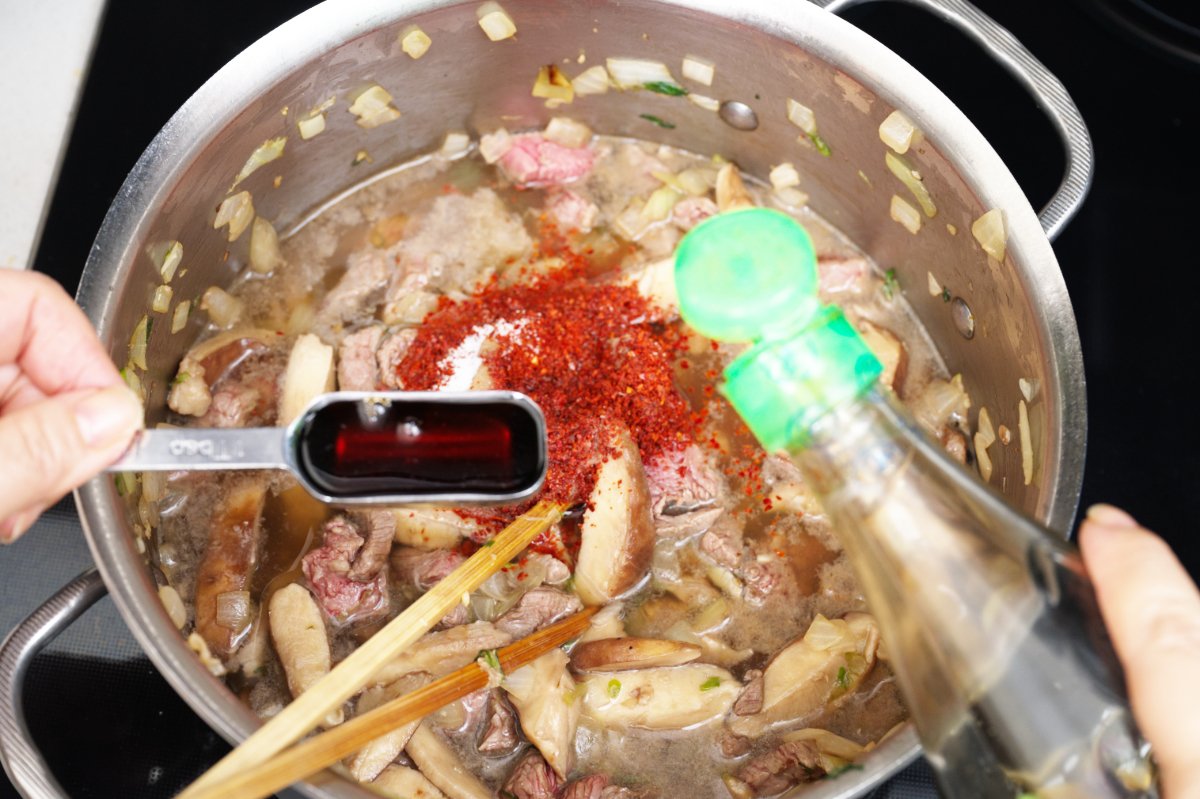
Cover and cook for 6-7 minutes:
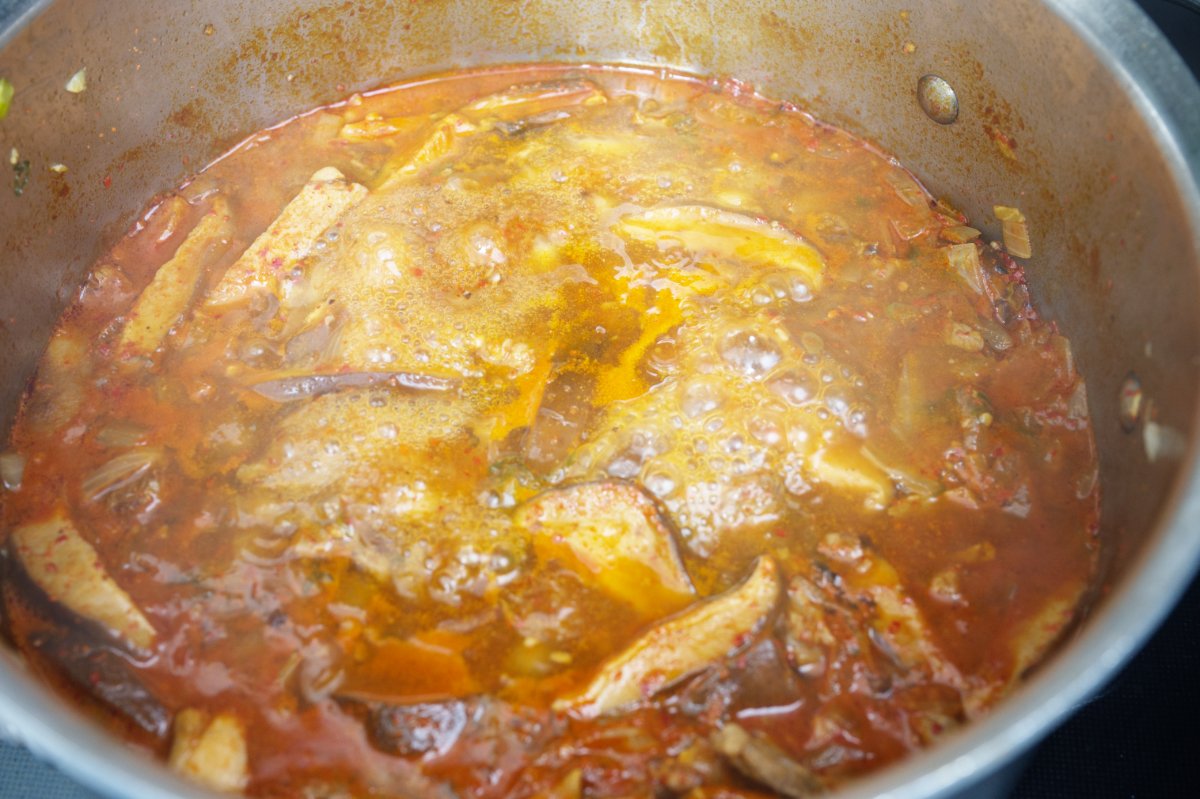
In Korea, this stew is often served in a traditional stone bowl known as a Dolsot. These thick vessels hold heat like nothing else, so the stew continues to bubble furiously all the way to the table. It’s not just for show — that intense heat keeps the tofu silky, the broth scorching hot, and gently cooks the egg right in the center. It’s dinner and a little bit of theater in one bowl.
So there are a couple options for serving your Beef Sundubu-Jjigae. You can either divide the stew into two individual pots for a dramatic, bubbling presentation with the egg and tofu in each, or keep it all in one pot for a more communal, family-style experience. Both ways, the tofu stays silky, and the egg poaches perfectly in the hot broth.
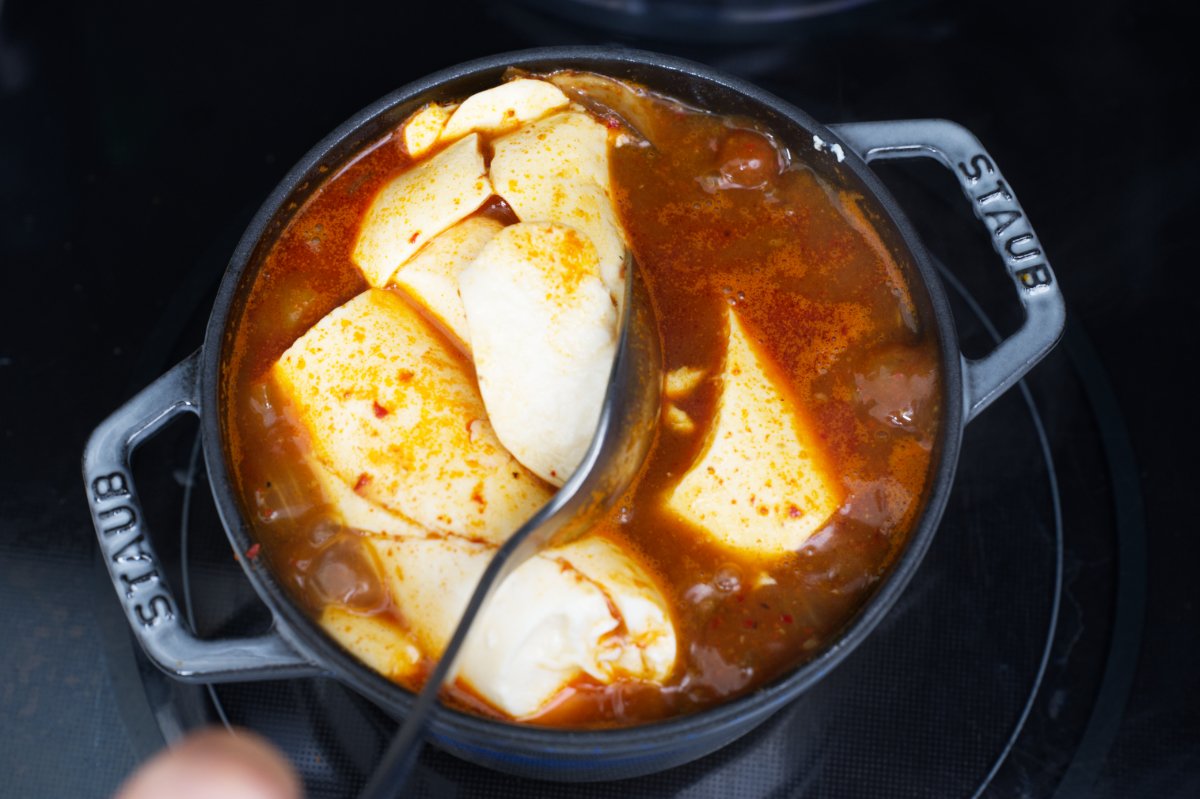
I have two small dutch ovens that do a pretty good job of mimicking those stone pots but also work on an induction stove, so that’s what I used. I portion the broth and then add the tofu. This isn’t your ordinary tofu — the soft tofu for sundubu comes in a convenient tube, which makes it extra creamy and easy to break into the stew. If you can’t find the tubes of sundubu, don’t worry — you can use regular soft or silken tofu from the grocery stores. The key is to be gentle: this tofu is delicate and can break apart easily, so stir it in slowly at the end of cooking. While it won’t have quite the same silky creaminess as traditional sundubu, it will still absorb the spicy, savory flavors of the broth beautifully.
Spoon the tofu into the stew:
Crack an egg into each pot. (Or both eggs into the one pot)
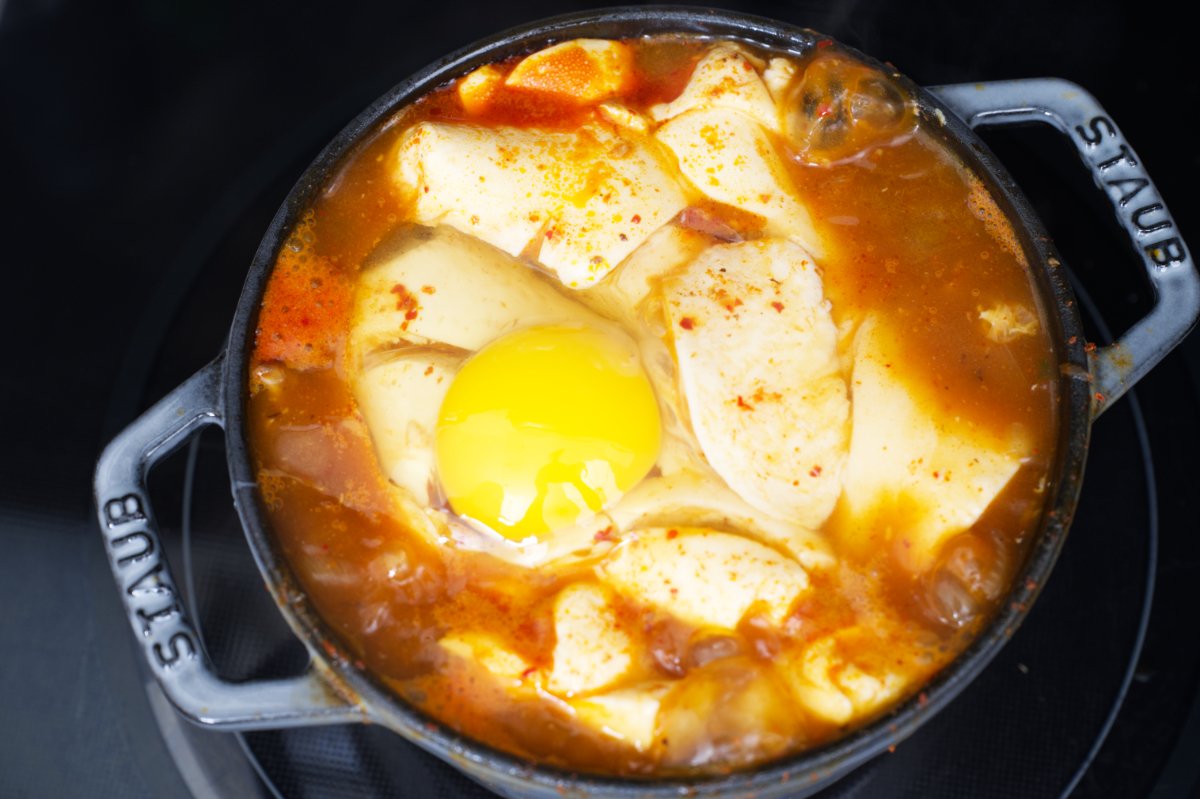
Garnish with green onions:
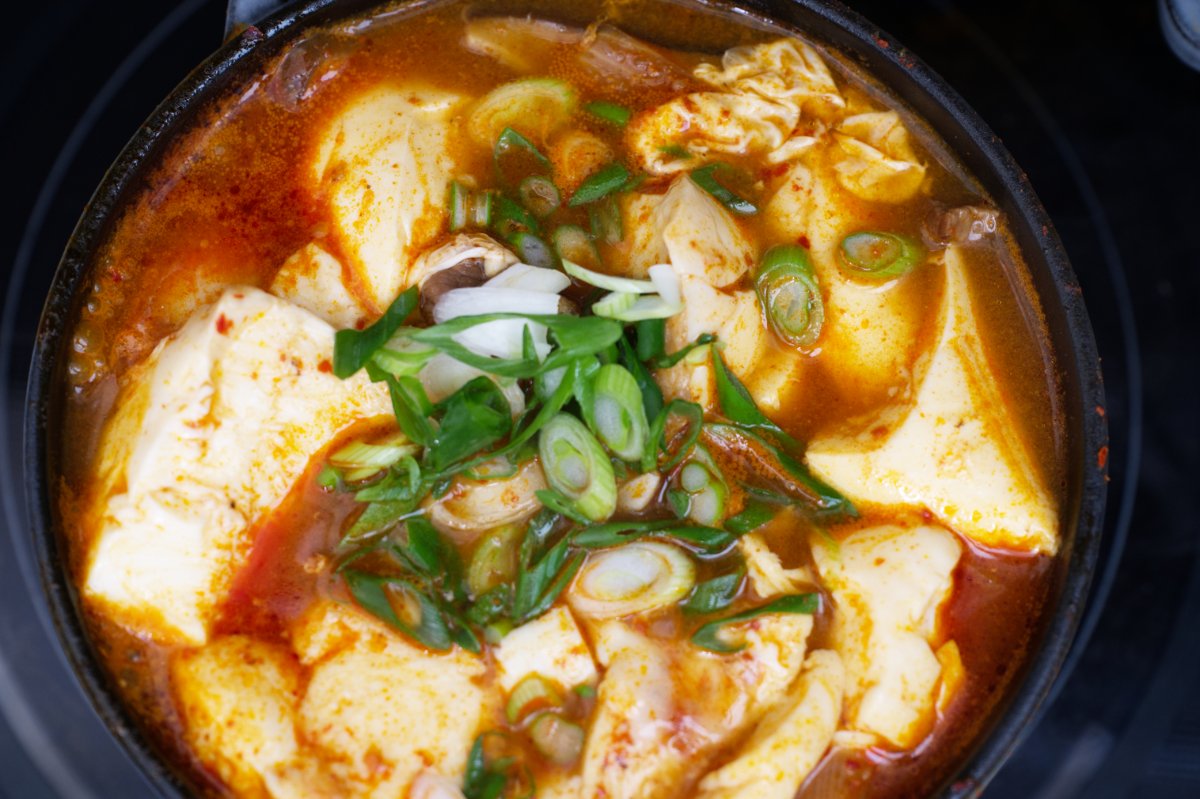
And serve this gorgeous, crimson bowl of delight:
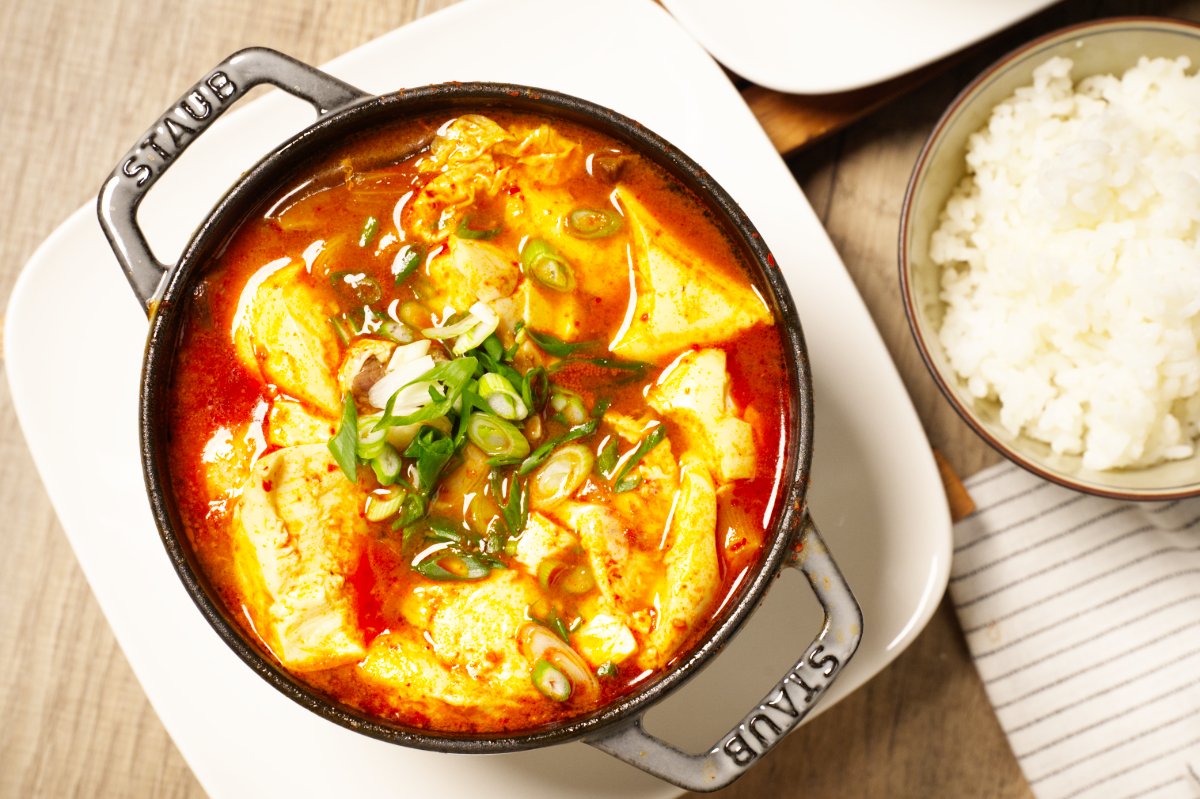
This is meant to be served piping hot, perhaps alongside rice and maybe with some banchan to round out the meal. I want to hear what you serve it with, drop me a line down below. And don’t forget to tag us in your food pics @funkyasiankitchen, we love hearing from you!
Beef Sundubu-Jjigae
- Prep Time: 10 minutes
- Cook Time: 50 minutes
- Total Time: 1 hour
- Yield: serves 2
- Category: soups, stews
- Cuisine: Korean
Ingredients
For the broth:
- 2 ½ cups water
- ½ ounce kombu/dashima (about the size of your hand) cut into small pieces
- 8 large dried anchovies (heads and guts removed)
For the stew:
- 8 ounces rib eye (or any tender cut of beef), cut into small pieces
- 8 pieces shiitake mushrooms (about 4 ounces)
- ½ large onion, diced
- 2 garlic cloves, minced
- 2 scallions, trimmed and minced
- 1 Tablespoon neutral oil
- 2 tubes of sundubu (soft tofu), 11 ounce each
- 2 Tablespoons fish sauce
- ½ teaspoon sea salt
- 3 Tablespoons gochu-garu (Korean hot pepper flakes)
- 2 teaspoons toasted toasted sesame oil
- ¼ teaspoon ground black pepper
Garnish:
- 2 eggs and extra minced scallion
Instructions
Make the anchovy stock
Place the water in a stock pot. Add the anchovies and kelp. Bring the pot to a simmer over high heat. Partially cover with a lid, lower heat to medium and simmer for 30 minutes. Strain and either discard the solids or use for another purpose. You should yield 2 cups of stock. If not, add a little water to make up the difference. Set the stock aside.
Make the stew
Heat a heavy pan over medium high heat. Add the oil, onion, garlic, and green onion. Stir with chopsticks or a wooden spoon for 3-4 minutes until the onions are soft and lightly browned. Stir in the beef and shiitake mushrooms and continue to cook for about 2 to 3 minutes until the beef is mostly cooked. Add the stock, salt, fish sauce, korean chili flakes, sesame oil, and fresh ground pepper. Cover and cook for 6 to 7 minutes over medium heat.
If you are putting the stew into two individual pots, now is a good time to transfer it. You can also leave the stew in one pot. If you’ve transferred the stew, bring them back to a simmer over medium high heat. Cut the tubes of soft tofu in half and add to the soup, gently breaking the tofu up a little with a wooden spoon. Let the stew simmer for 3-5 minutes and then turn off the heat. Carefully crack an egg into the pot(s). Garnish with minced scallion and serve Beef Sundubu-Jjigae immediately.
Notes
*You can make the anchovy stock ahead of time and refrigerate. It keeps for several days. You can also freeze it so it’s available whenever you need it.
*If you cannot find the tubes of silken tofu, you can also use silken tofu that comes packed in the square containers. Some of them are labeled soon-tofu, especially made for these types of stews, and are extra soft. Use an equivalent amount of tofu.
*The eggs are raw but they cook some in the hot stew. If you prefer to have your eggs more cooked, leave the stew simmering for a couple extra minutes after adding the eggs.
Keywords: jjigae, korean, soup, stew, tofu, winter, beef, spicy, egg


The 30-minute anchovy-and-kombu stock makes this feel far more approachable than the word “stock” usually suggests. Removing the anchovy heads and guts is a helpful detail too, since it explains how to keep the broth savory without letting it turn harsh or overly fishy. I also appreciate the distinction between gochugaru’s smoky, fruity warmth and ordinary crushed red pepper. Finishing the stew with an egg in a heat-retaining bowl sounds like the best part—the yolk should soften both the color and the heat as it is stirred through.